Reports
Reports and publications authrored by Dr Ruth Graham and made available in the public domain
2026
March 2026
Advancing the reward of university teaching:
insights from three waves of the Teaching Cultures Survey
The report offers a global picture of progress in strengthening the reward of university teaching within academic careers. It draws on findings from the Teaching Cultures Survey, conducted in 2019, 2022 and 2025, which captures academics’ experiences and perspectives on how university teaching is supported, valued and rewarded within their institutions. The analysis offers insight into how institutional reforms are experienced in practice, and how academics’ experiences have shited over time.
In 2025, 17 research-intensive universities spanning nine countries and four continents took part in the Teaching Cultures Survey. A total of 12,071 academics participated in the 2025 survey, representing all career stages from PhD students to university presidents. Participating universities included King’s College London, Utrecht University, the University of British Columbia and the University of New South Wales.
2025
January 2025
Rewarding teaching in academic careers:
mapping the global movement for change
The report maps a growing global movement to strengthen how university teaching is recognised and rewarded within academic careers. Drawing on interviews with leaders and change-makers from across the global higher education community, it identifies the universities seen to be at the forefront of this change. The analysis charts the progress of institutional, national and cross-national initiatives to reform academic career progression, and examines how leading universities are addressing key barriers to change.
The study draws on interviews with more than 130 university leaders and change-makers across 26 countries, conducted between October 2023 and November 2024. Together, their experiences provide a global perspective on the scale and direction of change, as well as the strategies being used to reshape how teaching is supported, evaluated and rewarded within academic careers.
2022
October 2022
Crisis and catalyst: the impact of COVID-19 on global practice in engineering education
The report explores the sector-wide impact of COVID-19 emergency teaching on engineering education worldwide, drawing on the experiences and perspectives of university leaders, engineering instructors and faculty, educational specialists and engineering students. It examines both the immediate disruption caused by the pandemic and its potential longer-term implications for engineering education.
The findings point to emergency teaching as both a crisis and a catalyst: exposing and exacerbating major challenges facing engineering education, while also accelerating change and creating opportunities for reform. The report considers how these experiences could shape the future direction of engineering education, while identifying lessons with wider relevance across the higher education sector.
October 2022
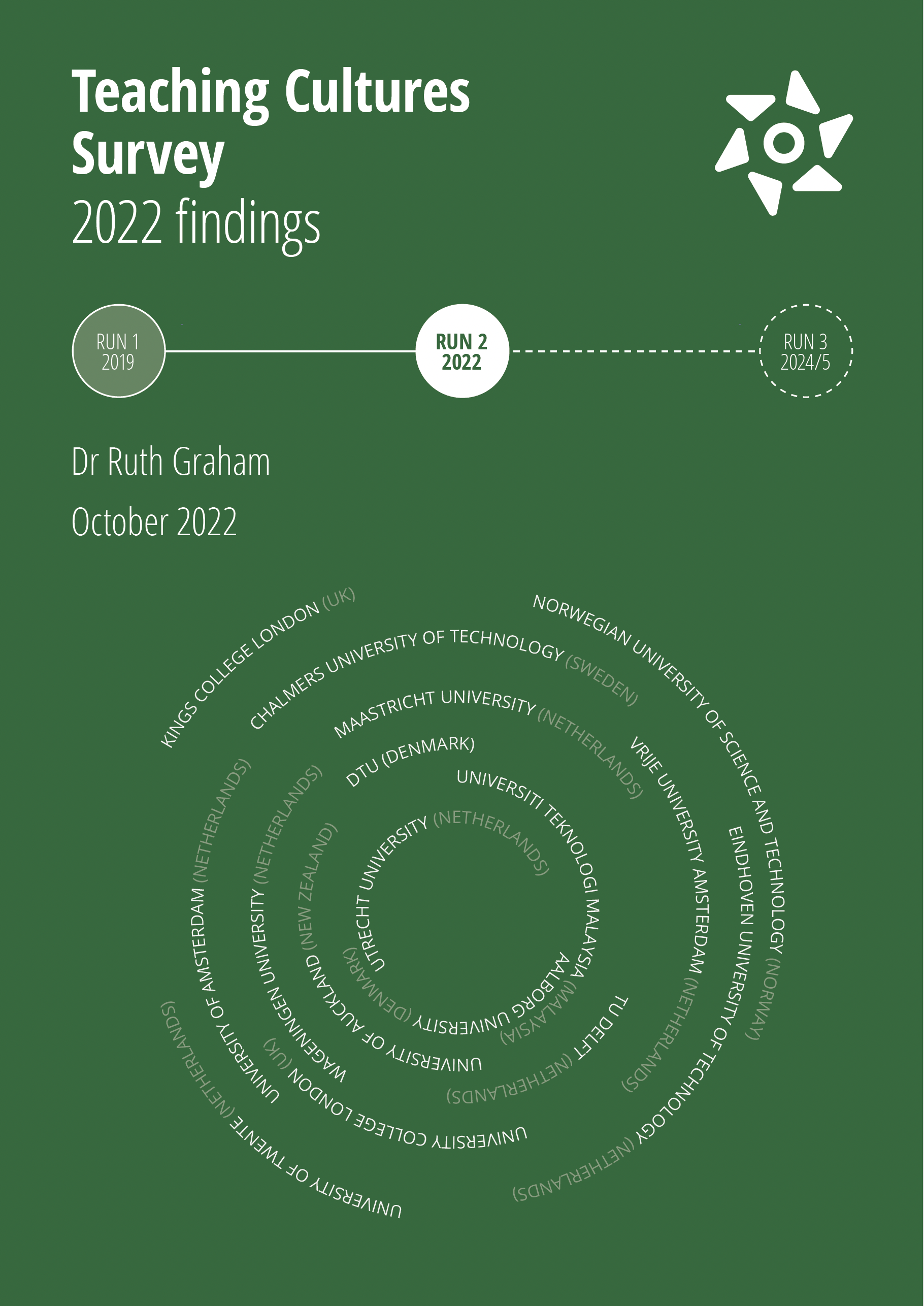
Teaching Cultures Survey: 2022 findings
The report presents findings from the second Teaching Cultures Survey, designed to explore the impact of institutional changes to how university teaching is rewarded in academic careers. It captures and tracks academics’ experiences and perceptions of how university teaching is supported, valued and rewarded at their institution.
In 2022, 11,614 academics from 16 research-intensive universities from across eight countries took part, including three universities participating for the first time. The report presents the consolidated findings and examines how academics’ experiences had changed since 2019, against the backdrop of the extended period of ‘emergency teaching’ prompted by the COVID-19 pandemic.
2020
May 2020
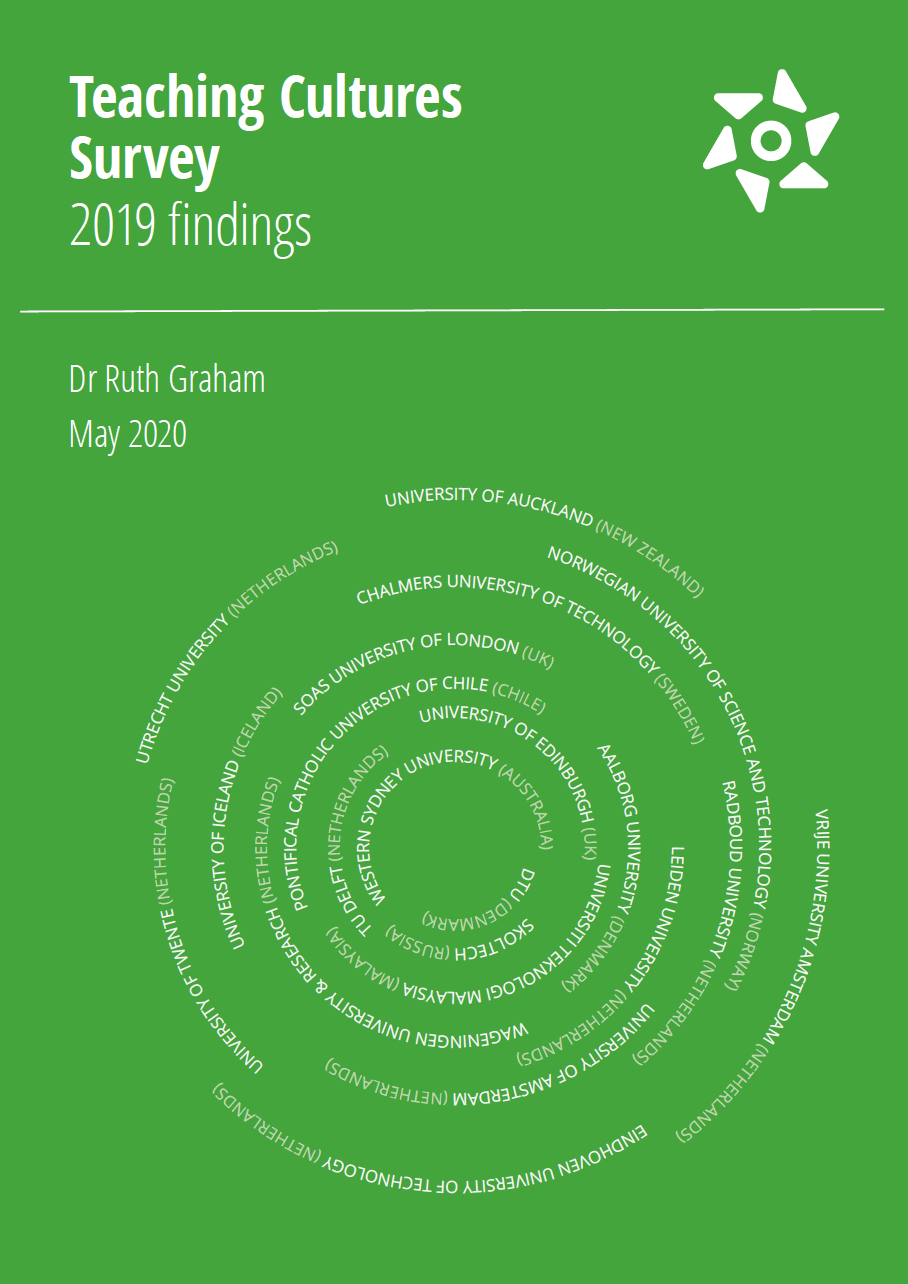
Teaching Cultures Survey: 2019 findings
The report presents findings from the first Teaching Cultures Survey, designed to explore the impact of institutional changes to how university teaching is rewarded in academic careers. It captures academics’ experiences and perceptions of how university teaching is supported, valued and rewarded at their institution.
In 2019, 15,659 academics from 21 universities across 10 countries took part. The report presents the consolidated findings, providing a global picture of the culture and status of teaching within participating universities and establishing a baseline against which changes in academics’ experiences could be tracked in subsequent surveys.
2019
May 2019
Improving reward for university teaching: a roadmap for change
The report provides practical guidance for universities seeking to reform how teaching achievement is evaluated and rewarded. Developed alongside the Career Framework for University Teaching, it shifts the focus from what institutions might change to how such reforms can be successfully implemented and sustained
The Roadmap draws on the experiences of universities that have already undertaken reforms to institutional support and reward systems for university teaching. It is informed by in-depth interviews with individuals who played key roles in designing and delivering those reforms. The report identifies the key steps in the process of change, the major challenges institutions may face, and strategies associated with successful reform.
2018
March 2018
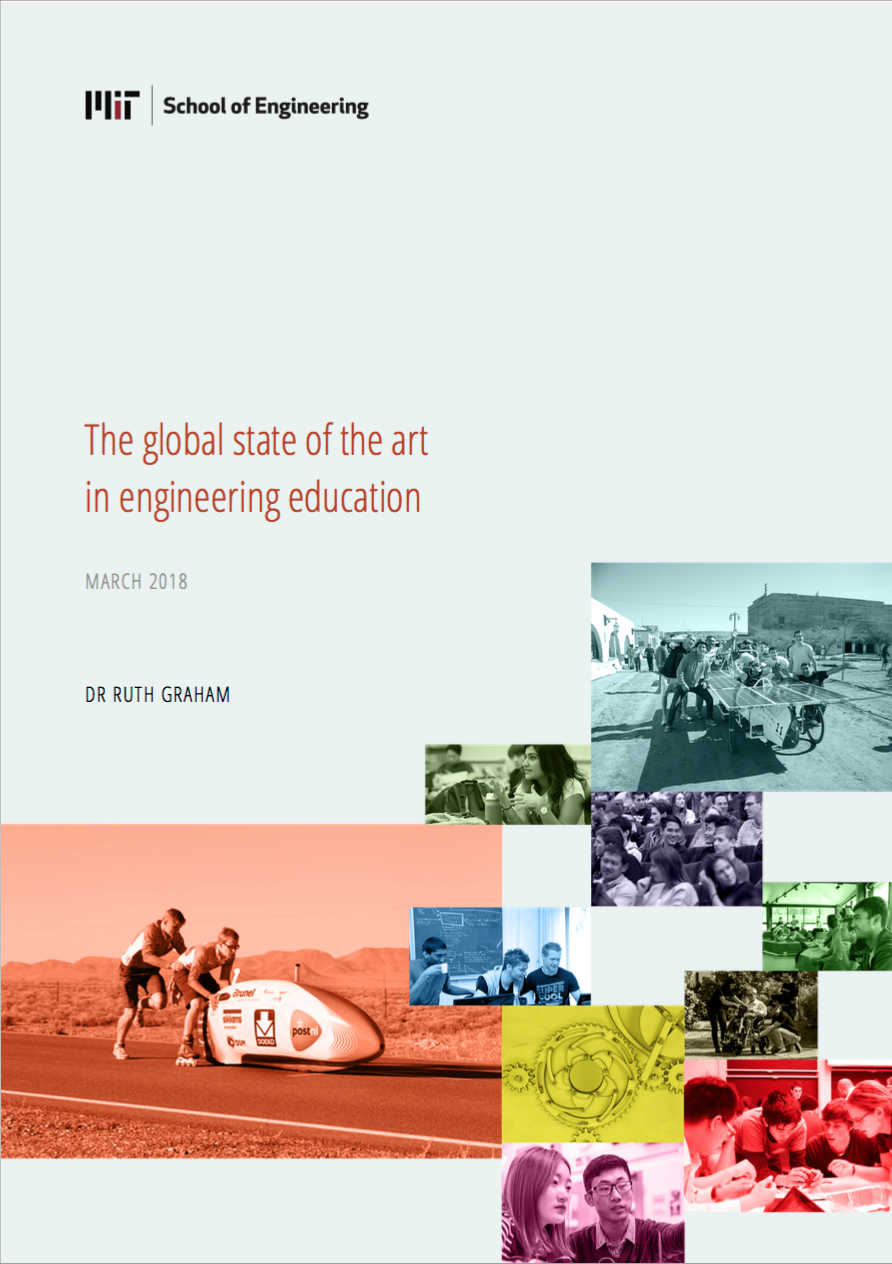
Global state of the art in engineering education
The report provides a global review of cutting-edge practice in undergraduate engineering education and the trends likely to shape its future. Commissioned by MIT, the study drew on interviews with 178 individuals from 18 countries with knowledge and experience of world-leading engineering programmes, together with in-depth case studies of four universities.
The report identifies universities regarded as current and emerging leaders in engineering education and explores the characteristics that distinguish their approaches. It highlights major shifts in engineering education worldwide and the opportunities and challenges facing the sector.
April 2018
Career Framework for University Teaching
The report introduces the Career Framework for University Teaching, a resource developed to support the evaluation and recognition of university teaching within academic careers. It explains the rationale for the Framework, how it was developed and how it can be used to inform academic appointment, promotion and professional development.
Developed and tested with 15 university partners worldwide, the Framework provides a structured pathway for academic career progression based on achievement in university teaching. The report includes examples of how universities have applied the Framework in practice to support institutional change.
Earlier reports

June 2014
Creating university-based entreprenurial ecosystems
March 2012
Ingredients of successful educational change